Frequently Asked Questions
What is the Taubman Medical Research Institute?
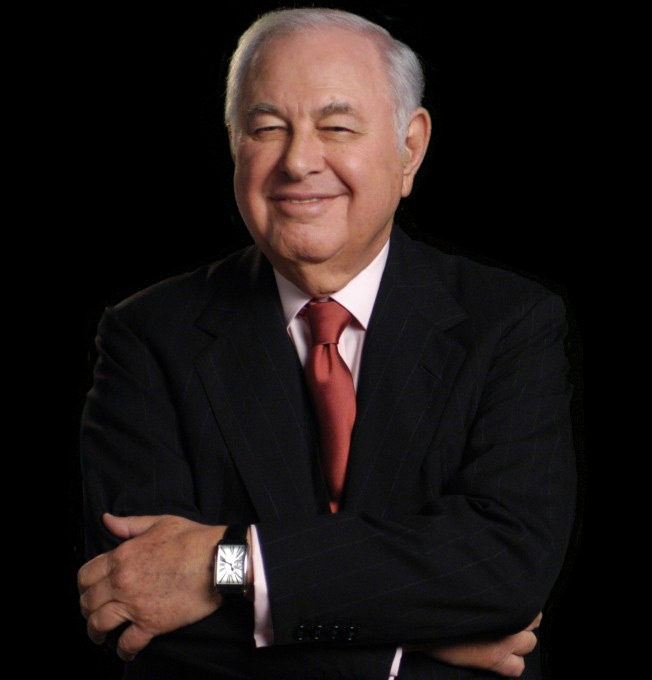
In 2008 Michigan businessman and philanthropist A. Alfred Taubman provided the initial funds to establish the institute, which now is part of the University of Michigan Medical School.
Our mission is to provide the university’s finest medical scientists the freedom, resources and collaborative environment they need to push the boundaries of medical discovery, to produce breakthroughs in cures and treatment of disease and ultimately to alleviate human suffering.
The slogan of the Institute, “Where scientists create cures…” incorporates our mission of helping physician-scientists – doctors with active patient practices – speed the development of effective treatment for some of the most devastating illnesses.
Where is it located?
The Taubman Medical Research Institute is housed in the A. Alfred Taubman Biomedical Science Research Building (AATBSRB) on the medical campus of The University of Michigan in Ann Arbor.
Just a few blocks from U-M landmarks like the ‘Diag,’ State Street and the Baird Carillon, the 472,000 AATBSRB houses 240 state-of-the-art laboratory modules used by Taubman Scholars and other university departments.
Office space, seminar rooms and a 300-seat auditorium make the BSRB a versatile research, learning and gathering center for some of the nation’s most cutting-edge scientists.
How is it funded?
In addition to the $100 million provided by Mr. Taubman, the institute relies on the support of other generous donors who have helped us create programs such as the Emerging Scholars grants and other initiatives.
Individual gifts to the institute have ranged from $20 to seven-figure sums; contributions of any amount are gratefully received and applied to our ground-breaking programs. We assure donors that 100 percent of their gift will be used to support the research and science of the Taubman Institute.
How are scientists selected to be Taubman Scholars?
In keeping with the mission of the Taubman Institute to foster practical results, we seek applications from what are known as clinician-scientists – that is, medical doctors with active patient practices who also direct their own research laboratories.
Proposals are reviewed by a scientific advisory board; applicants selected as Taubman Scholars are funded for three-year terms.
What are examples of some current Taubman Institute research?
Taubman Scientists are aggressively seeking treatment and cures for many of the diseases and conditions that most commonly affect our longevity and quality of life today – from prostate cancer to obesity to Alzheimer’s disease. Currently 16 Taubman Scholars, including the Senior and Emerging Scholars, are supervising laboratories with the institute’s funding.
For example, Dr. David Pinsky, a Senior Taubman Scholar and Director of the U-M Cardiovascular Center, is exploring the potential of a powerful type defensive protein the body makes to impede clots, in hopes of finding therapies to treat stroke and heart attack.
Dr. Frank Brosius III, a Taubman Scholar and chief of the Nephrology Division, is investigating at the molecular level how elevated blood glucose levels damage the kidneys of diabetes patients with the goal of developing prevention and treatment strategies.
Emerging Scholar Dr. Ronald Buckanovich has identified two drugs that may directly target cancer stem cells and make traditional chemotherapy 10 times more effective. Emerging Scholar Dr. Erika Newman is studying neural crest stem cells; her aim is to find more effective treatment for neuroblastoma, a common pediatric cancer.
What else does the Taubman Institute do?
- The Consortium on Stem Cell Therapies, established in 2009 and also located at the BSRB, is the first center in Michigan and one of only a handful in the nation to derive embryonic stem cell lines. The consortium, directed by Taubman scientists Sue O’Shea, Ph.D. and Gary Smith, Ph.D., focuses on developing embryonic stem cell lines that contain the genetic defects for inherited diseases, giving scientists unprecedented opportunities to develop new treatments and cures.
- We’ve inaugurated a Visiting Professor lecture series that brings renowned scientists – many nominated by our own Taubman Scholars – to campus for lectures and question sessions open to students and researchers campus-wide.
- To encourage a vigorous exchange of ideas, we sponsor and promote regularly scheduled brown-bag sessions, talks and seminars for and among the Taubman scientists.
- The Taubman Medical Research Institute hosts an Annual Symposium each fall, featuring presentations and updates by Dr. Feldman and the Taubman Scholars. Each year a distinguished guest delivers the keynote address; in 2011, Michigan Gov. Rick Snyder plans to discuss the importance of biomedical research and stem cell discoveries to the state’s economic recovery.
Taubman Science
ALS patient feels great after stem cell transplant
Took part in Phase I of Dr. Eva Feldman's human clinical trial
Ted Harada tells Crain's Detroit Business that nearly nine months after receiving stem cell injections to his spinal cord, improvement persists.
Click here to read the interview
Clinical Trials
The birth of two human clinical trials
The Taubman Institute’s overriding purpose is to discover potential new treatments that can be tested in clinical trials. Watch as two Taubman Scholars explain how they made it happen.
Taubman Science
Institute training video helps physicians overseas
U-M exam method for diabetic nerve damage translated to Mandarin Chinese. The Taubman Institute has produced video of an exam protocol that will help doctors in Asia and elsewhere as they grapple with growing diabetes epidemics and the resulting complications.
news & events
The Latest
-
Dr. Eva Feldman discusses stem cell therapies on Michigan Radio
June 14, 2013 -
2013 Taubman Prize
June 05, 2013 -
Stem cell treatment "dramatically slows ALS" in some patients
May 31, 2013
Taubman Science
Taubman Scholars direct 31 human clinical trials
Science funded by the Taubman Institute has led to 31 current human clinical trials, studying potential therapies for diseases including breast cancer, muscular dystrophy, diabetes and ALS. See the complete list of trials.
People who care
Generous donors fund institute's summer students
Leadership advisory board members fund Tauber Family Student Internship Program
Three future medical scientists will work with Taubman Institute researchers starting in June.
Accomplishments
State leaders laud Taubman Institute accomplishments
Leaders of state and local government visited the Taubman Institute on March 18 to tour Taubman Scholar labs and discuss the potential medical research offers for both improving the health of residents and establishing new jobs and businesses in Michigan.


Donors pitch in to keep brilliant science minds at U-M Video